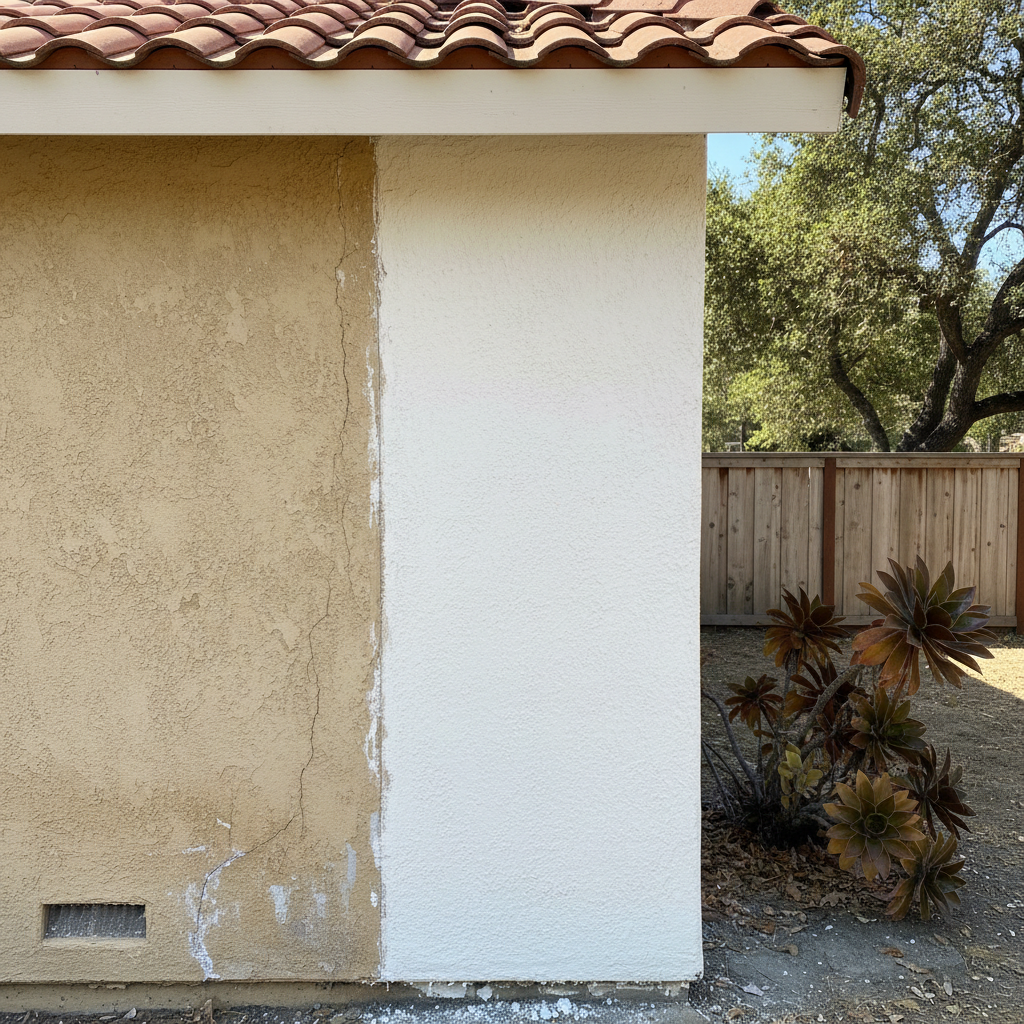
Alright, let's talk stucco repair. You've got a crack, a chip, or maybe some water damage showing up on your walls. It's not the end of the world, but you really do need to deal with it. The big question I hear a lot is: Do I just patch this thing up, or am I looking at replacing a whole section?
There's no single answer that fits everyone, but I can tell you what I've seen work best for homes right here in Berkeley. We're going to compare patching against full panel replacement – the good, the bad, and what makes sense for your specific situation. Let's dive in.
Patching: The Quick Fix
Patching is exactly what it sounds like. You've got a localized area of damage, maybe a small crack, a hole from an old fixture, or a bit of spalling. We clean out the damaged material, prep the surface, and then apply new stucco to match the existing texture and color as closely as possible. It's usually quicker, less disruptive, and definitely cheaper upfront.
When Patching Works Best:
- Small, isolated damage: A single crack that isn't spreading, a ding, or a small section of stucco that's come loose.
- Cosmetic issues: If the underlying structure is sound and it's just surface-level damage.
- Budget constraints: When you need to address an issue without making a major investment.
The Downsides of Patching:
The main issue with patching, especially on older homes here in Berkeley, is matching. Stucco ages, fades, and gets dirty. Trying to perfectly match a fresh patch to 30-year-old stucco is tough, really tough. You'll often end up with a visible 'scar' or a slightly different shade or texture. It's like trying to patch a faded pair of jeans with brand new denim – you can tell. Also, if the underlying problem (like water intrusion) isn't fully resolved, that patch might not hold up for long.
Full Panel Replacement: The More Involved Solution
This is where we cut out a larger, damaged section of stucco – usually a full panel from seam to seam, or a significant area – and replace it entirely. This means going down to the sheathing, inspecting the substrate, making any necessary repairs to the moisture barrier or framing, and then applying new lath, scratch coat, brown coat, and finish coat. It's a more extensive job, takes longer, and costs more.
When Full Panel Replacement is Necessary:
- Extensive cracking or widespread damage: If you've got a spiderweb of cracks, or a large area where the stucco is loose, crumbling, or spalling off.
- Water damage: This is a big one. If water has gotten behind the stucco and damaged the sheathing, framing, or moisture barrier, you absolutely need to open up that wall and fix the underlying problem. Just patching over it is asking for bigger trouble down the road. I see this a lot in older Craftsman homes in the Berkeley Hills where flashing might have failed or gutters overflowed consistently.
- Failed original application: Sometimes the original stucco wasn't applied correctly, or it's just reached the end of its lifespan in a large section.
- Better aesthetic match: While it seems counterintuitive, replacing a whole panel can sometimes give a more uniform look than a patchwork quilt of repairs, especially if the original stucco is heavily textured or a unique color.
The Downsides of Full Panel Replacement:
Cost and time, mainly. It's a bigger project, more materials, more labor. It can also be more disruptive to your daily life for a few days. But honestly, if you're dealing with significant water damage or structural issues, these 'downsides' are really just the cost of doing the job right.
My Recommendation for Berkeley Homeowners
Look, if it's a tiny, superficial ding and you're okay with a potential color variation, a patch can work. It'll protect the house and keep things looking decent for a while. But here's the kicker for us in Berkeley, especially with our damp winters and occasional heavy rains:
If there's ANY suspicion of water intrusion or underlying structural damage, you've got to go with full panel replacement.
I can't stress this enough. Water behind stucco is a silent killer for your home. It leads to rot, mold, and can compromise the integrity of your walls. Just patching over a water-damaged area is like putting a band-aid on a broken leg – it doesn't fix the real problem. We've seen too many homeowners try to save a buck with a patch, only to have to rip out even more wall later when the damage has spread.
When we do a full panel replacement at Berkeley Stucco & Plastering, we're not just fixing the stucco; we're addressing the whole wall system. We make sure your moisture barrier is sound, your flashing is correct, and that the new stucco is applied to last. It's an investment, sure, but it's an investment in the long-term health and value of your home.
Before you decide, get a professional to take a look. We can assess the damage, tell you what's really going on behind that stucco, and give you an honest recommendation on whether a patch will cut it or if you need to go a bit deeper. Don't guess – know for sure.